A Beginner’s Guide to Finding Cheap Furniture, Refinishing It, and Selling It on Facebook Marketplace
Learning how to flip furniture for profit sounds glamorous until you find yourself crouched beside a dumpster at 6:45 on a Tuesday morning, trying to determine whether the “vintage” dresser is charmingly distressed or simply losing a fight with gravity.
Still, furniture flipping can become a practical and creative way to earn extra money. You find inexpensive or unwanted pieces, improve them, and sell them for more than you spent. The process combines treasure hunting, basic woodworking, design, photography, negotiation, and the emotional resilience required to hear someone offer you $20 for a cabinet that took three weekends to restore.
If you approach the work thoughtfully, you can build a profitable side business without renting a storefront or filling your home with enough furniture to make your family stage an intervention. You can begin with a small budget, learn as you go, and gradually develop an eye for pieces that other people overlook.

What Furniture Flipping Actually Involves
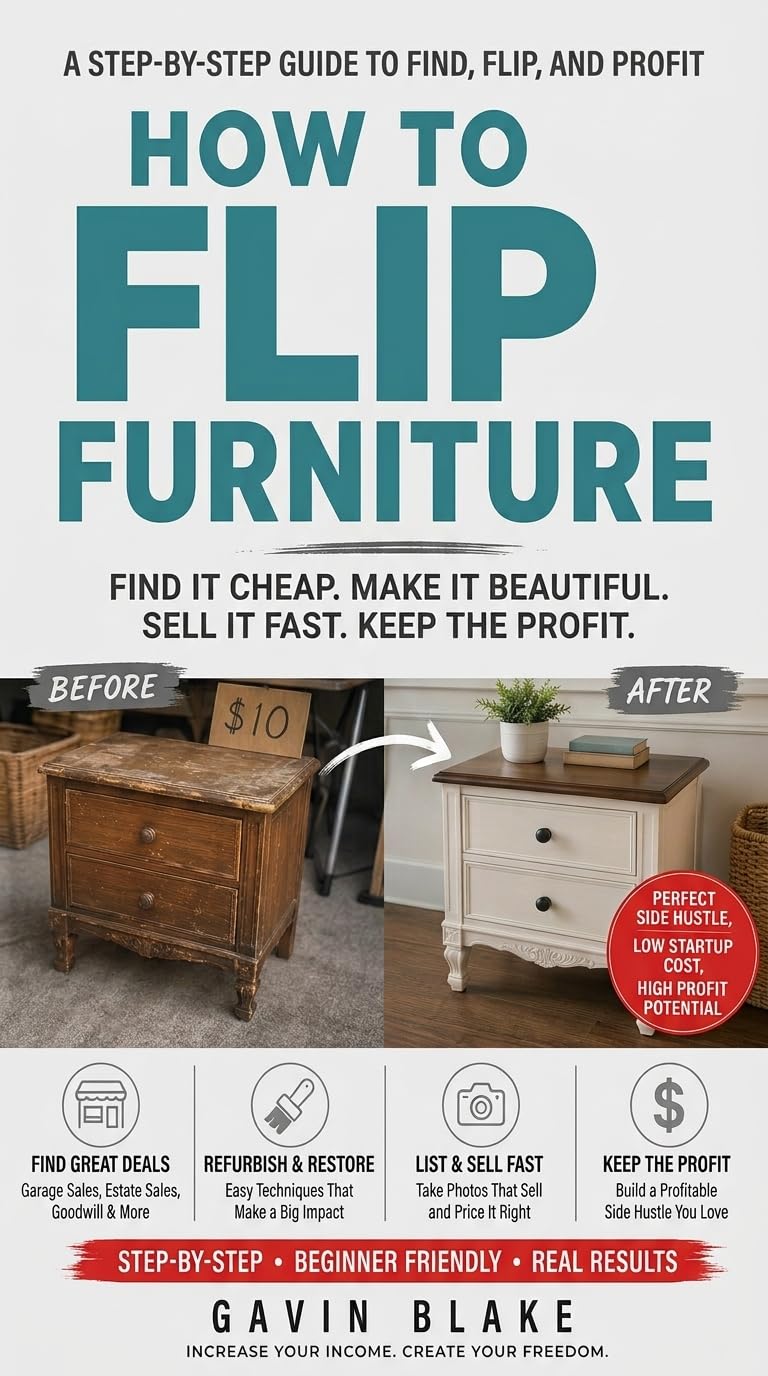
Furniture flipping is the process of buying used furniture at a low price, improving its appearance or function, and reselling it for a profit. Your improvements might include cleaning, sanding, painting, staining, repairing, replacing hardware, or simply presenting the piece better than the previous owner did.
The work is not always about dramatic transformations. Sometimes the most profitable flip involves a solid wood table that needs nothing more than a deep cleaning, fresh oil, and better photographs. Other times, you may rescue a battered nightstand and give it a new color, new knobs, and a second chance at not being used as a plant stand with a mysterious water ring.
You make money by controlling three things: your costs, your time, and your selling price. If you spend $40 on a dresser, $35 on supplies, and six hours restoring it, selling it for $150 may sound profitable. However, once you consider your time, transportation, listing effort, and the possibility that the buyer will message you at midnight asking whether the drawers are “drawer-sized,” the profit becomes less impressive.
That does not mean every flip needs to produce a fortune. In the beginning, your goal is to learn which pieces sell, which repairs are manageable, and how long each project takes you. Profit follows good decisions more reliably than it follows enthusiasm.
Why Facebook Marketplace Is Useful for Beginners
Facebook Marketplace gives you access to a large local audience without requiring you to build a website or pay for a physical retail space. People use it to buy everything from baby clothes to treadmills to dining tables they insist are “barely used,” despite the fact that one chair appears to be holding the entire structure together.
You can list furniture quickly, communicate with potential buyers, and arrange local pickups. Because most transactions happen nearby, you may avoid expensive shipping. Large furniture is particularly well suited to local marketplaces because buyers generally prefer to inspect it in person before committing.
Facebook Marketplace also helps you research prices. Search for similar items in your area and look at how sellers describe them, what condition they are in, and how long they remain listed. You may notice that a plain oak dresser sells quickly while a heavily decorated one sits untouched for weeks, silently judging everyone who scrolls past it.
Your local market matters. A style that performs well in a major city may move more slowly in a rural area. Small apartments may create demand for compact storage pieces. Families may want durable dining tables and toy storage. College towns may favor inexpensive desks, bookshelves, and nightstands.
How to Start With a Small Budget
You do not need a workshop full of professional tools to begin. You need enough money to buy your first few pieces, purchase basic supplies, and handle transportation. Starting with a limited budget can actually protect you from making expensive mistakes. You are less likely to buy an enormous china cabinet if you know it will consume half your available cash and all the oxygen in your garage.
A beginner-friendly starting budget might include:
- The purchase price of one or two small pieces
- Basic cleaning supplies
- Sandpaper or sanding sponges
- Primer and paint
- Brushes or rollers
- New hardware
- Wood filler
- Drop cloths
- Transportation costs
You can expand your supplies gradually. Avoid buying every tool recommended by someone with a dedicated workshop and a suspiciously spotless apron. You do not need a paint sprayer, industrial sander, or twelve varieties of finishing wax on your first weekend.
Start with manageable furniture such as nightstands, small dressers, side tables, stools, or simple bookshelves. These pieces are easier to transport, require less material, and allow you to practice without risking a large investment.
How to Find Cheap Furniture to Flip
Finding inventory is one of the most important parts of furniture flipping. You can find pieces through Facebook Marketplace, thrift stores, garage sales, estate sales, auctions, curb alerts, and local buy-nothing groups.
Facebook Marketplace Searches
Facebook Marketplace is often the easiest place to begin because you can search from home while wearing clothes that would not survive public inspection. Use terms such as “dresser,” “solid wood table,” “nightstand,” “cabinet,” “bookshelf,” “free furniture,” and “moving sale.”
Search variations matter. One seller may list a dresser as a “bureau,” while another calls it a “chest of drawers” or “bedroom storage thing.” The final category is not technically elegant, but it may help you find a bargain.
Save searches when possible, check listings frequently, and respond promptly. Attractive pieces at low prices can disappear quickly. A message such as “Is this available?” may not be enough when twenty other people have already sent the same sentence. You can write, “Hi, I’m interested and can pick this up today. What time works for you?” This gives the seller a clear reason to respond.
Thrift Stores and Charity Shops
Thrift stores can offer good prices, especially if you visit frequently. Inventory changes constantly, and a piece that appears ordinary at first glance may become valuable after a closer inspection.
Look past the existing finish. Thick brown paint, outdated hardware, and surface grime can make quality furniture look unappealing. Your job is to imagine what remains underneath. This is useful, although it can also lead you to buy an object that turns out to be mostly wood-colored optimism.
Check the back, underside, drawers, and joints. Look for solid wood, sturdy construction, dovetail joints, and pieces that are structurally sound. Avoid furniture with extensive water damage, severe odors, active pests, or major warping unless you already know how to handle those problems.
Garage and Estate Sales
Garage sales are excellent places to negotiate, particularly near the end of the day. Sellers often prefer to accept a reasonable offer rather than move everything back into the house.
Estate sales may contain higher-quality furniture, although prices vary. On the first day, desirable pieces may be priced close to retail. On the final day, discounts can be significant. Arrive early if you want the best selection, or arrive late if you want the best chance of bargaining. Furniture flipping, like life, frequently asks you to choose between abundance and sleep.
Free Furniture
Free furniture can create excellent profit margins, but “free” does not mean costless. You may still pay for transportation, repairs, cleaning products, paint, and disposal if the piece turns out to be unusable.
Inspect free items carefully before loading them into your vehicle. Check for insects, mold, mildew, strong smoke odors, and structural damage. A free dresser with bedbugs is not a bargain. It is an unsolicited roommate arrangement.
If you collect furniture from the curb, be mindful of local rules and safety. Wear gloves, use proper lifting techniques, and avoid items exposed to rain for long periods. You want to flip furniture, not your spine.
How to Choose Furniture With Profit Potential
The best piece to flip is not necessarily the ugliest one. It is the one with a reasonable purchase price, manageable repairs, and a clear group of potential buyers.
Look for furniture that has at least one of these advantages:
- Solid construction
- Useful size and shape
- Attractive original details
- Strong local demand
- Easy-to-update hardware
- Minimal structural damage
- A style that can appeal to several decorating tastes
Solid wood is often desirable because it can be repaired, sanded, stained, or painted. Veneer can also be valuable, but you must treat it carefully because the top layer is thin. Particleboard furniture may be worth flipping if it is inexpensive and in good condition, but it generally does not offer as many restoration options.
Pay attention to proportions. A narrow dresser may appeal to apartment dwellers, while a large dining table requires buyers with enough space and a vehicle capable of transporting it. The larger the item, the smaller your pool of potential buyers may become.
Consider the item’s original purpose and whether people still want it. A beautiful media cabinet may look impressive, but modern televisions are often too wide or too thin to fit comfortably. You may need to market it as a sideboard, storage cabinet, or entryway console instead.
How to Calculate Your Potential Profit
Before buying a piece, estimate your total investment. Your purchase price is only the beginning.
Include:
- Purchase price
- Fuel or delivery expenses
- Cleaning supplies
- Paint, stain, or finish
- Hardware
- Repair materials
- Listing and selling time
- Your labor
- Possible disposal costs
A simple formula can help:
Estimated profit = Selling price − total expenses
Suppose you buy a nightstand for $15, spend $20 on supplies, and pay $10 for transportation. If you sell it for $85, your estimated cash profit is $40. You may decide that this is worthwhile if the project takes two hours. If it takes ten hours, you may decide that the nightstand has become less of a business opportunity and more of a tiny unpaid supervisor.
Research comparable listings before you buy. Look at completed or recently sold items when possible, not only active listings. Sellers can ask any price they want. That does not mean anyone is giving them that price.
Create a maximum purchase price before negotiating. If you believe you can sell an item for $150 and expect $40 in expenses, you may set a maximum purchase price of $50 or $60. Leave room for surprises because furniture often conceals its problems until you have carried it up a staircase.
How to Inspect Furniture Before You Buy It
A careful inspection can save you money and several unpleasant afternoons.
Open every drawer and cabinet. Make sure drawers move properly, doors close, and shelves are present. Check whether the piece wobbles. Examine corners, legs, joints, and the back panel. Look for cracks, missing veneer, swollen wood, and evidence of previous repairs.
Smell the furniture. This may feel overly intimate, but odors are important. Smoke, pet urine, mildew, and damp basements can be difficult to remove. A piece may look beautiful while carrying the aromatic history of three generations and one deeply anxious cat.
Look for pests. Tiny holes, sawdust-like material, insect shells, or live bugs are warning signs. Do not bring questionable furniture into your home or workspace until you understand how to inspect and treat it safely.
Ask the seller about its history when appropriate. You may learn whether it was stored in a garage, exposed to water, or previously painted. Sellers may not know every detail, but their answers can reveal useful information.
Cleaning and Preparing Your Furniture
Cleaning is often the least glamorous step and one of the most important. Dirt, grease, wax, and household residue can interfere with paint adhesion and finishes.
Start by removing hardware and taking out drawers. Vacuum dust and debris from corners, then clean the surfaces with a suitable degreaser or mild soap solution. Avoid soaking wood, especially around joints and veneer. Excess moisture can cause swelling, lifting, or warping.
Allow the piece to dry completely before sanding or painting. This may require patience, which is unfortunate because patience is usually the first tool to disappear when you have a project spread across your living room.
Repair loose joints with appropriate wood glue and clamps. Fill small dents and holes with wood filler, then sand the repaired areas smooth. Replace missing screws and tighten hardware. If a drawer sticks, inspect its runners and check for swelling or misalignment.
Do not assume every imperfection must disappear. Minor marks can contribute character, particularly on vintage furniture. Your goal is to make the piece attractive, functional, and honest—not to erase every sign that a human being has ever owned it.

Choosing Between Paint and Stain
Paint gives you flexibility and can transform furniture dramatically. It is especially useful when the wood has uneven color, repairs, stains, or a finish that is difficult to restore. Neutral shades such as white, black, cream, gray, muted green, and navy often appeal to a broad audience.
Bold colors can work, but they may narrow your buyer pool. A bright orange dresser may delight one person and cause another to experience a brief spiritual crisis. If you use a strong color, consider whether the piece has the shape and style to support it.
Staining preserves the appearance of wood and can showcase attractive grain. It requires more preparation because the surface usually needs to be sanded carefully and stripped or scuffed. Stain can produce a beautiful result, but it can also reveal every scratch, water mark, and past mistake the furniture has been carrying since 1987.
You can also use a combination of finishes. For example, you might paint the frame and stain the top. This creates contrast and can make a basic piece appear more intentional. The best finish depends on the furniture, its condition, your skill level, and what buyers in your area prefer.
Basic Refinishing Steps
Once the piece is clean, dry, and repaired, prepare the surface. Light sanding can remove gloss and help paint adhere. You may need more extensive sanding if the existing finish is damaged or if you plan to stain the wood.
Use primer when appropriate, particularly over dark finishes, stains, knots, or slick surfaces. Apply thin, even coats rather than one thick layer. Thick paint can drip, remain soft, and develop brush marks that announce your impatience to every visitor.
Allow each coat to dry according to the manufacturer’s instructions. Dry to the touch does not always mean fully cured. Furniture may feel dry while remaining vulnerable to scratches, dents, and fingerprints from the curious person who must immediately touch it.
Sand lightly between coats if needed. Remove dust before applying the next layer. Finish with a protective topcoat suitable for the paint or stain you used. High-use surfaces such as tables and dressers benefit from durable protection.
Replace or clean the hardware after the finish has cured. New knobs and pulls can change the appearance of a piece quickly, although they can also cost more than the original furniture if you become emotionally attached to brass.
How to Price Flipped Furniture
Pricing requires both research and restraint. You want to earn a profit without setting a price so high that your listing becomes a permanent feature of the internet.
Search for comparable furniture in your area. Compare size, material, condition, style, and finish. A restored solid wood dresser should not be priced like a damaged particleboard cabinet, even if both contain drawers and have spent time near a wall.
Consider your total expenses and desired return. You do not need to recover every minute of labor at a professional hourly rate when you are learning, but you should avoid consistently underpricing your work. If every project sells quickly, your price may be too low.
Leave some room for negotiation. Many Marketplace buyers expect to bargain. If you want to receive $140, you might list the piece at $160 or $170, depending on local demand. Be realistic, though. A price that invites negotiation is different from a price that suggests the dresser comes with a small coastal town.
State whether the price is firm in your listing. You can also decide in advance how low you are willing to go. This prevents you from making emotional decisions after someone offers half your asking price and adds, “I can pick up in five minutes.”
How to Photograph Furniture for Facebook Marketplace
Good photographs can make the difference between a message and silence. You do not need an expensive camera. A smartphone, clean lens, natural light, and uncluttered background can produce strong results.
Place the furniture in a bright area. Avoid harsh direct sunlight, distracting shadows, and flash when possible. Photograph the front, sides, top, drawers, shelves, hardware, and any flaws. Buyers appreciate clear information, and honesty reduces unpleasant conversations later.
Stage the piece simply. A plant, lamp, books, or folded blanket can help buyers imagine the furniture in a home. Do not bury a dresser under decorative objects as if you are preparing it for a museum exhibit titled “Things You Can No Longer Put Anywhere Else.”
Your first photograph should show the entire piece clearly. Additional images can highlight details and dimensions. Include a photo of any damage or repair. Transparency makes buyers more confident and protects you from accusations that the scratch appeared during the drive, the pickup, or possibly the Civil War.
How to Write an Effective Listing
Your listing should answer the questions buyers are most likely to ask. Include the type of furniture, dimensions, materials when known, finish, condition, and any relevant details about repairs.
A useful description might explain that the piece has been cleaned, repaired, painted, and sealed. Mention whether the drawers operate smoothly and whether the furniture is solid wood, veneer, or manufactured board if you know.
Write in a friendly and straightforward way. Avoid claiming that a piece is “rare,” “antique,” or “designer” unless you can support that description. Misleading language may attract attention briefly, but it can also attract a buyer who arrives prepared to cross-examine your dresser.
Include pickup information, approximate location, and whether the buyer needs help loading. If the furniture is heavy, say so. If stairs are involved, mention them. Surprise stairs are the enemy of both buyers and lower backs.
How to Communicate With Buyers
Respond promptly, but do not feel obligated to remain available at all hours. Answer questions clearly and confirm the pickup time before sharing your exact address.
Some buyers will ask whether an item is available and then vanish into the digital fog. Others will schedule a pickup and fail to appear. This is normal Marketplace behavior, like weather but with more “Is this still available?”
You can reduce wasted time by using clear messages:
“Hi, yes, it’s available. Pickup is in the north side of town. I’m available Saturday between 10 and noon. Does that work for you?”
Confirm again on the day of pickup. If a buyer does not respond, avoid holding the item indefinitely unless they have made a firm commitment that you trust. You can say, “I’ll hold it until 3 p.m. If I don’t hear from you, I’ll move to the next interested buyer.”
Remain polite even when negotiations become theatrical. You do not need to defend the moral character of your paint color. If someone makes an offer you dislike, respond briefly and move on.
Safety During Furniture Sales
Your safety matters more than completing a sale. Arrange pickups during daylight when possible. Meet in a public place for small items, or have another adult present when buyers come to your home.
Do not share unnecessary personal information. Keep valuables, family documents, and private areas out of view. If you feel uncomfortable with a buyer, cancel the transaction. No dresser is worth overriding your instincts.
For heavy furniture, use proper lifting techniques and ask for help. Be clear about whether the buyer is responsible for loading. You can assist if you choose, but you are not required to carry a solid oak sideboard down three flights of stairs while a stranger says, “Just tilt it a little.”
Accept payment through a method you trust. Verify that payment has actually arrived before handing over the furniture. Be cautious with overpayment scams, unusual shipping requests, and buyers who want to send a third party without clear communication.
Common Beginner Mistakes to Avoid
One common mistake is buying furniture because you like it rather than because you can sell it. Your personal taste is useful, but your business depends on understanding the customer’s taste too.
Another mistake is underestimating repair time. A project that appears to need “just a quick coat of paint” may require cleaning, sanding, priming, multiple coats, curing, hardware replacement, and the removal of paint from one elbow.
Avoid buying too many pieces at once. Inventory can quickly overwhelm your storage space, budget, and ability to move through your home without navigating an obstacle course. Finish one or two projects before collecting ten more.
Do not skip preparation. Paint applied over grease may peel. Stain applied over an uneven surface may look blotchy. A protective finish applied too soon may remain tacky. Preparation is less exciting than the reveal, but it is what makes the reveal possible.
Finally, do not compare your beginner work to polished social media videos. You are seeing the finished project, not the crooked first coat, the broken drawer, or the moment someone discovered paint on the dog. Improve through repetition rather than expecting professional results immediately.
How to Build a Repeatable Furniture-Flipping Process
As you gain experience, create a process you can repeat. Photograph each piece before you begin. Record the purchase price, supply costs, hours worked, final selling price, and any problems you encountered.
This information helps you identify which projects are profitable. You may discover that small tables sell quickly, painted dressers earn strong returns, or large cabinets require too much storage for the money they produce.
Develop a supply system. Keep cleaning materials together, store paint where it remains usable, and label hardware. Your future self will appreciate this, although your future self may still spend twenty minutes looking for the screwdriver that is directly in front of you.
You can also create a recognizable style. Some flippers become known for muted colors, natural wood finishes, modern hardware, or carefully restored vintage pieces. A consistent style can make your listings easier to recognize and help buyers return when they need another item.
When to Scale Your Furniture-Flipping Business
You do not need to scale immediately. First, prove that you can buy, restore, list, and sell furniture consistently. Once you understand your local market, you can consider taking on larger pieces, investing in better tools, or creating a dedicated workspace.
Track your cash flow. Reinvest only part of your profits and keep money aside for supplies, transportation, taxes, and unexpected repairs. A profitable month can make you feel like a business genius until the van needs new tires and the entire budget leaves through the passenger-side door.
Consider whether your time is producing enough return. If a project takes twelve hours and earns $30, it may not be worth repeating unless you enjoy the process and treat the income as secondary. Profit is important, but so are your energy, storage space, and general desire to continue living among ordinary non-furniture objects.
As your business grows, you might offer delivery for an additional fee, partner with local decorators, sell through other platforms, or rent a small studio. Make each change gradually and evaluate whether it genuinely improves your results.
Final Thoughts on Making Money Flipping Furniture
Furniture flipping rewards patience, observation, and a willingness to learn from pieces that do not behave as expected. You will buy something that seemed sturdy but develops a wobble. You will choose a paint color that looks elegant in the store and strangely medical under your garage lights. You will meet buyers who communicate only in thumbs-up emojis.
You will also experience the satisfying moment when an overlooked piece becomes useful and beautiful again. You will see a tired dresser leave your workspace looking confident. You will make a sale, earn more than you invested, and realize that your strange little experiment might actually work.
Start small. Inspect carefully. Track your costs. Choose projects that match your skills. Take honest photographs, write clear listings, and price your work with confidence. You do not need to transform every piece into a masterpiece. You need to make sound decisions often enough that the numbers move in your favor.
The furniture is waiting somewhere: in a garage, a thrift store, a moving sale, or beside a curb where someone has abandoned it beneath a sign that says “FREE,” as if the word itself can erase the smell of basement.
With practice, you can learn to see what others miss—and turn it into something worth buying.
If you enjoyed this article, clap for it, leave a response with your furniture-flipping questions or experiences, and subscribe to your Medium newsletter for updates and more practical guides.
Disclosure: As an Amazon Associate, I earn from qualifying purchases.